

When Governor General Sam Mostyn AC stepped out in a custom-made suit by The Social Outfit at her swearing-in ceremony, it wasn’t just a high-profile endorsement.
For Amy Low, who stepped into the CEO role in early 2025 after a decade on the board, it reflected something the social enterprise had spent years building: a brand that can stand on its own merits. Not as a “good cause”, but as a fashion label.
That distinction matters. Because standing on your own merits is key.
"Our customers are not shopping for impact,” Amy says.
“The impact is the nice to have. But they're really looking for something they want to wear, that makes them feel good because of the fit and the quality.”
It's a deceptively simple observation, but it's reshaping how The Social Outfit operates.
After 10 years, the foundations are there. The impact is proven. And while the mission remains the same – supporting refugee women into employment through fashion – the focus is shifting away from proving the impact model, and towards building something that genuinely competes in the market.
Putting product first
For many WISEs, impact leads. The product or service exists to deliver the mission, and the commercial side follows. Amy's view is the reverse.
She acknowledges that jobs-focused social enterprises are harder to run than normal businesses, which is exactly why product, commercial discipline and confidence matter more, not less.
“We’ve focused a lot on the product and the design of the product so that it stacks up, that it’s appealing, that it’s market led,” Amy explains.
That means asking the same questions any competitive fashion brand would ask. Is it desirable? Does it meet a real need? How does it compare? And critically, is it strong enough to stand on its own?
"It's really just defining who our customer is, who our key stakeholders are and why they should be engaged in our work," Amy says.
Not why should they care. But why should they buy.
Applying that lens changes what you prioritise. It also requires a particular kind of honesty about where the product sits in the market.
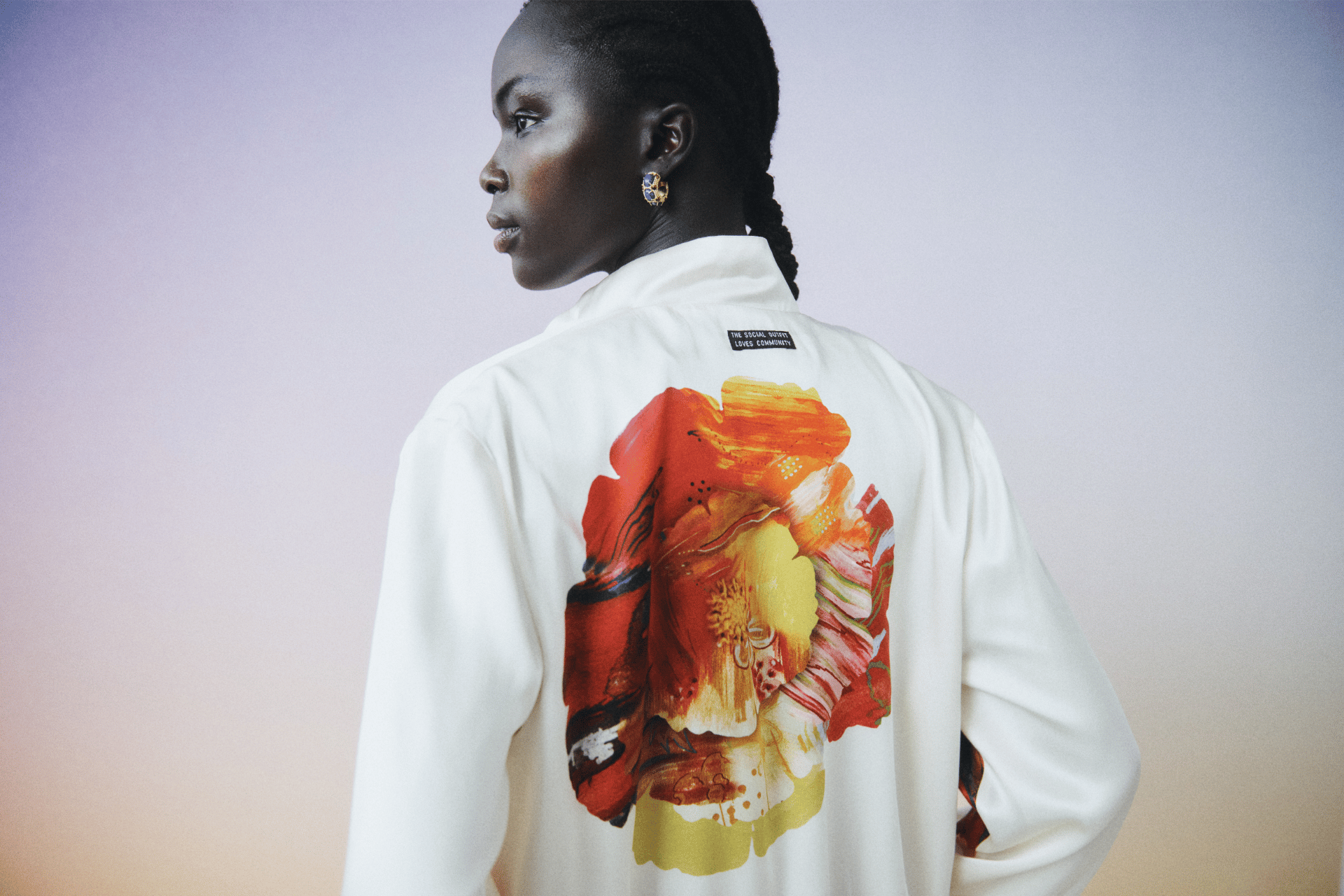
Josephen from The Social Outfit (Photographer: Diego)
Expertise isn't optional
That honesty is easier when you have people in the room who genuinely know the industry.
Half of The Social Outfit's team has experience in fashion, many with decades behind them. Amy herself spent a decade on the board and built a career in fashion, most recently leading global marketing at Futurity Brands, before taking the CEO role.
That depth isn't incidental. It's strategic. It is strengthening how the organisation operates across product, brand and commercial decisions.
"We come with a clear idea of how we bring our skills and experience to strengthen the programs that already exist," Amy says.
It's a useful reminder that building a competitive product requires more than good intent. It requires people who understand what customers expect, how competitors operate, and what good actually looks like.
For WISEs, this can be a gap. And it matters more in a model that already carries additional complexity.
A harder business model
Even with a strong product focus, WISEs are not playing on a level field.
“The competitor set is incredibly wide,” Amy says.
This means constantly translating value across different audiences, retail, manufacturing, social impact and funding, each with different expectations.
The Social Outfit is competing with fashion retailers, ethical brands, local manufacturers, social enterprises and not-for-profits, in an industry where margins are already tight.
“There's a reason why lots of clothing production happens in Bangladesh and China and not locally. It’s because the margins are really slim and the value for clothing from the majority of the population is quite low,” Amy says.
The Social Outfit makes everything in its Marrickville workroom in Sydney. It is also delivering employment pathways, training, and support. That combination creates a more demanding operating model than most businesses face.
“I think it’s a really difficult balance between impact and efficiency,” Amy says.
“Oftentimes, we’re over delivering in lots of different areas.”
And yet, that additional value is not always recognised or paid for.
There are also structural constraints.
Where a comparable commercial fashion brand might have large marketing teams and budgets, social enterprises are often operating with minimal resource.
Amy recalls a conversation her marketing manager brought back from an industry workshop.
“One of the speakers was a social media coordinator for a really successful Australian fashion brand, and she said very casually that she’s one of 14 people in their social media team,” Amy says.
“Imagine having 14 people in your social media team, then trying to justify that in a grant application, explaining the marketing budget goes to influencers. It just doesn’t stack up.”
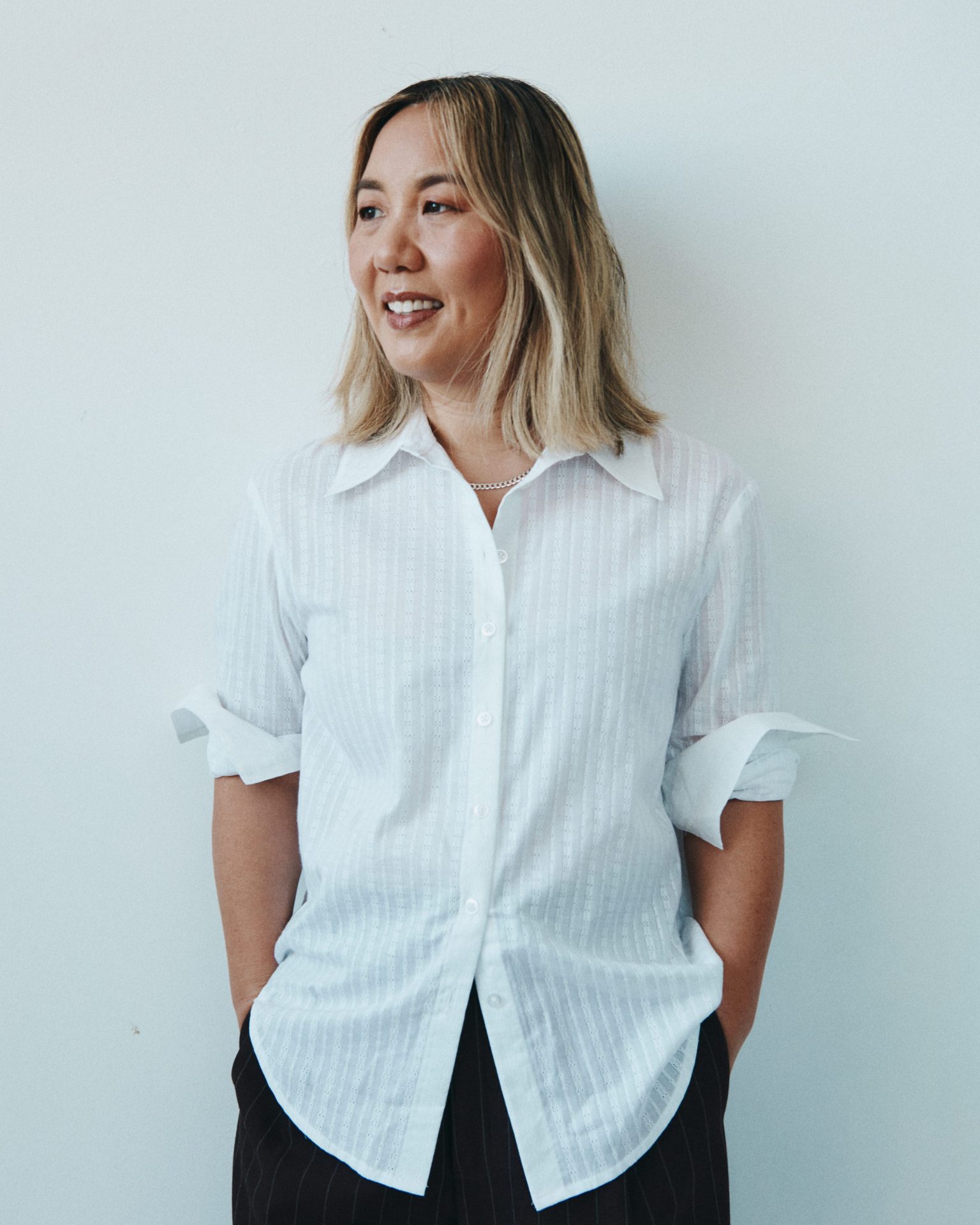
The Social Outfit CEO Amy Low stepped into the role in 2025.
None of that is offered as an excuse. If anything, it sharpens the argument for commercial discipline.
"When the model works well, we can actually employ more people," Amy says.
Commercial strength enables impact. Not the other way around. And that means the ambition has to be financial as well as social.
"Our ambition is to increase our self-generated revenue so that we don't have to rely on philanthropy in the longer term," she says.
Designed to move quickly
That commercial clarity also creates the conditions to move quickly when opportunity appears.
When labour laws shifted and affected how employment pathways could be structured, the team adapted rather than stalled.
When a pathway opportunity emerged with Woolworths, they started with a single store pilot rather than waiting for a fully formed model.
"When the window opens, be ready to just go," Amy says.
"We just go all in, measure closely, adapt, back ourselves and test things out.
“It’s about being strategic at every moment… being responsive and adaptive.”
That responsiveness isn’t accidental. It’s cultural.
“I think it’s having a really aligned team, everyone knows what their role is and where we are,” Amy says.
It’s also grounded in clarity.
"We've been really clear about what we can and can't do, and what's a stretch,” she says.
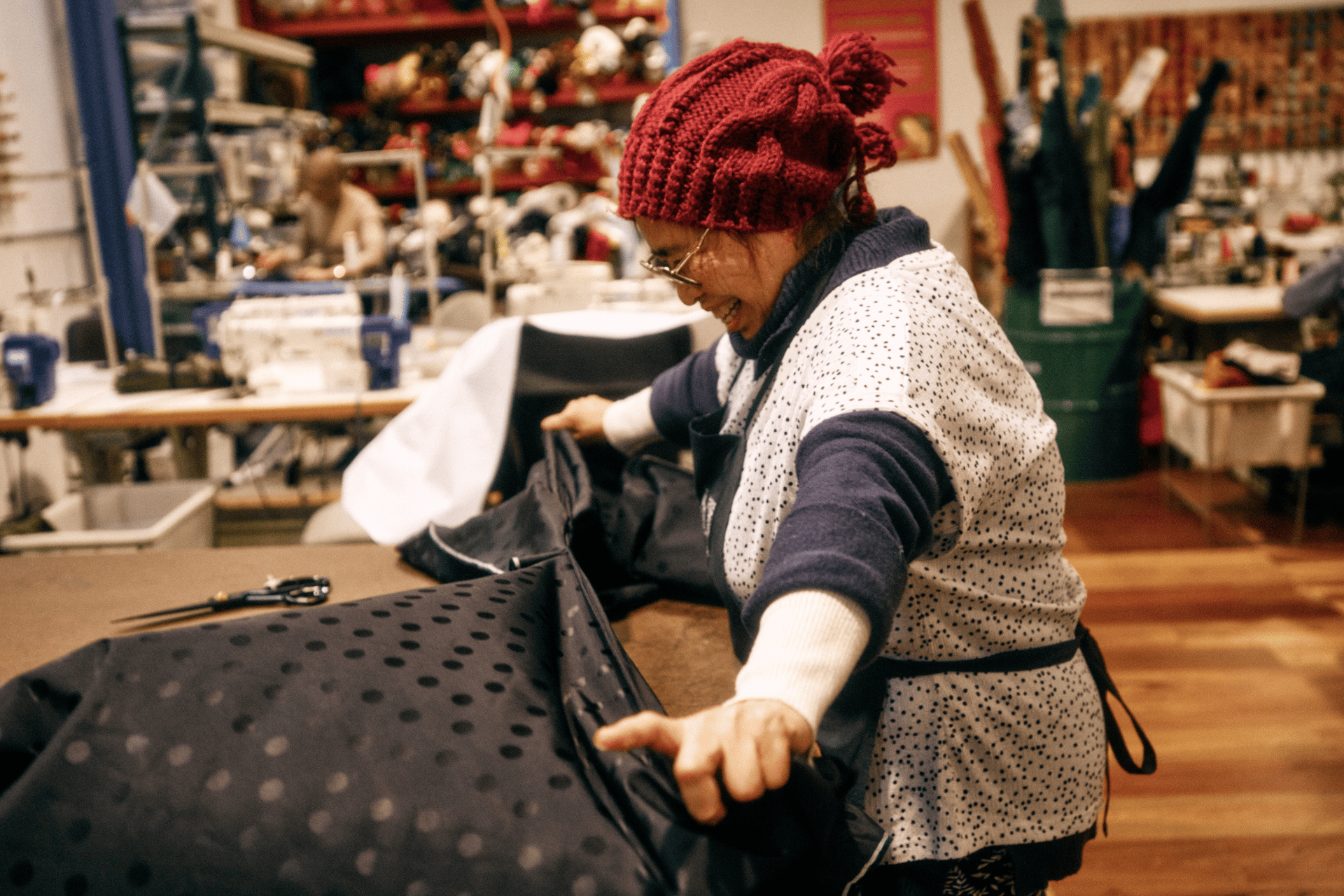
The Social Outfit (Photographer: Arvin Premkumar)
Competing without apology
Underpinning all of this is something less tangible but just as important: how the organisation positions itself.
"It's not being apologetic," Amy says. "When you're a charity, oftentimes it feels like you are less than, and I don't think that needs to be the case."
At The Social Outfit, that shows up in both product and story.
“It’s not a story of distress… it’s a story of skill and talent and creativity,” Amy says.
Fashion, she argues, is particularly well suited to telling it.
“It’s deeply personal and there’s something different that fashion does in telling stories,” she says.
“There’s a real pride that’s inherent in the work. It’s strength-based, expressive, creative, skills-based.”
After a decade, The Social Outfit has earned the confidence to say that clearly. The impact model is proven. The programs are established. The focus now is on how to build the business that carries it forward.
"We aren't shy about our credibility in how we deliver programs," Amy says. "We're not trying to prove ourselves in how we deliver impact. And so now is the time to ask, what's the next piece that is going to secure us our future?"
That question isn't only relevant for The Social Outfit. In May, White Box is taking a delegation of Australian social enterprise leaders and philanthropists to France to examine firsthand how policy, funding and procurement can better support a more commercially grounded model - one that leads with product rather than mission.
For WISEs still leading with mission over product, still filling roles with passion over expertise, still treating commercial discipline as secondary, Amy's provocation is worth sitting with: what's the piece that will secure your future?